

IT projects, infrastructure design, systems integration and infrastructure consulting delivered on time, with clean handover and support readiness. Most IT projects fail in the design phase, not in delivery. PTS runs IT and infrastructure projects in Hong Kong and across APAC — from infrastructure design through to office builds, relocations and refreshes. Vendor-neutral, end-to-end, with the discipline that keeps scope, programme and quality under control. Need the upstream design itself — concept design, standards and integrator assurance? That’s our technology design consultancy.
See how we delivered structured cabling for a global financial services firm, a 250,000 sq ft corporate office fit-out, and a regional infrastructure refresh for a UK retailer across four countries.
Key point
Five things separate a project that lands cleanly from one that drifts: scope clarity from day one, vendor-neutral design, BIM-rigorous documentation, phased delivery aligned to the fit-out programme, and a clean handover to operations.
Free planning tool
Moving office? Get your IT move plan in three minutes
The Office Move IT Planner builds your week-by-week T-minus plan — circuits, cabling, movers, meeting rooms — and flags anything at risk on your actual timeline. Keep it as a PDF, or send it to us for a free move review and a costed plan.
Infrastructure design and delivery
Infrastructure design
Network, cabling, equipment rooms, AV and Wi-Fi designed as one coherent system, not a bag of parts. Drawings and specifications your installers can actually build from.
Independent design advice
Independent advice on technology choices, vendor selection, and delivery models. Senior judgement when you need someone who’s seen the patterns before.
Design documentation
BoMs, drawings, RFP packs, low-level design documents that move a project from “we should do something about this” to “here’s what we’re building, by when, for how much.”
Peer review
Second opinion on someone else’s design. We identify the risks before they become construction-stage rework.
Our IT project services
Structured Cabling Systems
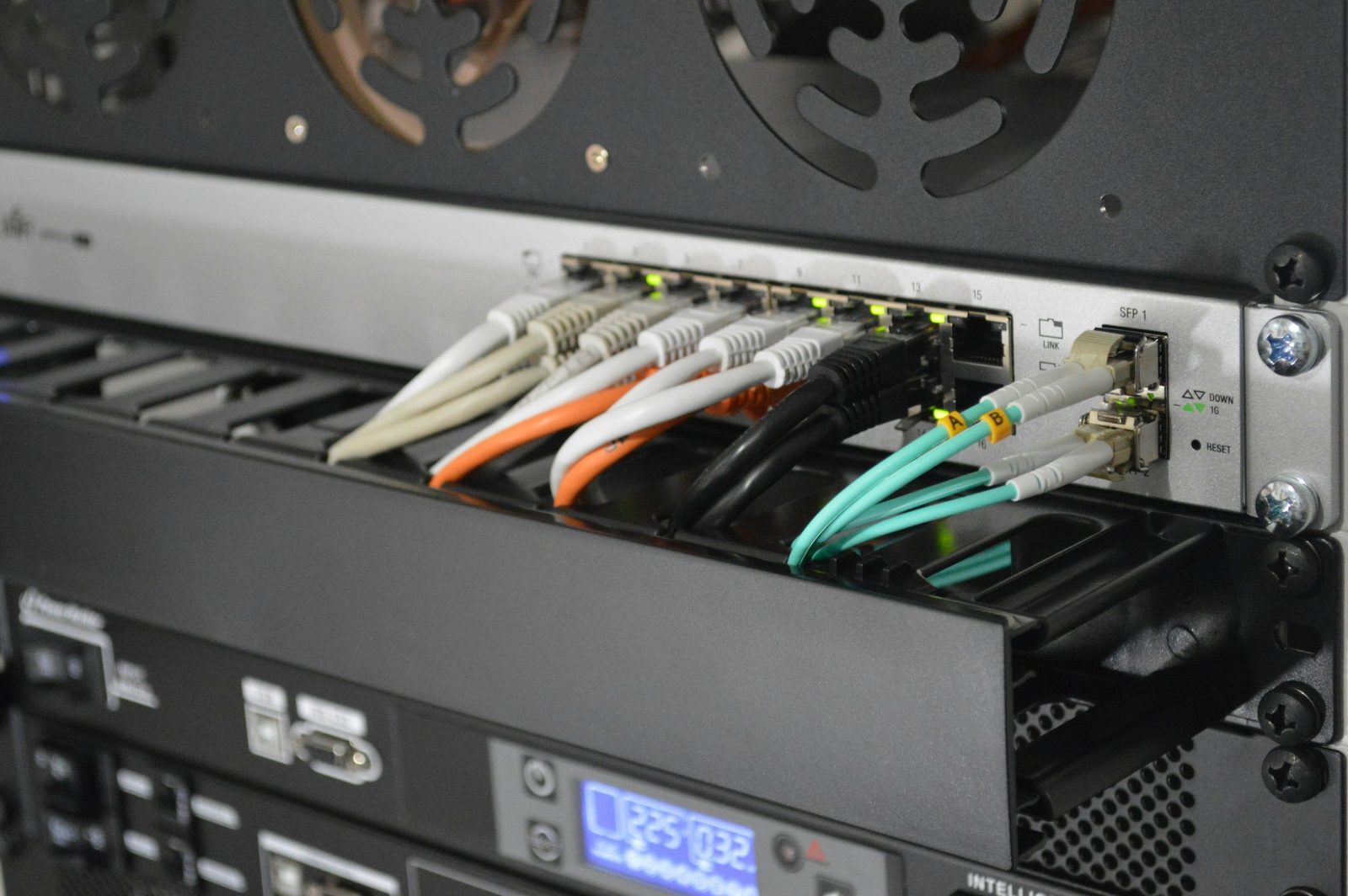
A full structured cabling service for Hong Kong offices: design and delivery of copper and fibre cabling for data, voice, AV, and IoT. Installed, labelled, and tested to support high-density workspaces, PoE requirements, and future growth. For what good looks like — standards, testing, common pitfalls — read our complete business guide to structured cabling for Hong Kong offices.
Comms & Equipment Rooms
End-to-end delivery of communications and equipment rooms, including rack layouts, containment, power and cooling coordination, commissioning, and handover documentation for ongoing operations.
Pathways & Containment
Design and installation of cable pathways and containment systems, including trays, trunking, floor boxes, and under-floor solutions. Coordinated on-site to avoid clashes, delays, and rework during fit-out.

Smart workplace technology
We deliver workplace technology projects that support hybrid work, collaboration, and reliable connectivity. Scope is defined upfront and delivered through vendor coordination, installation management, testing, and handover.
Meeting room and collaboration projects
Design and delivery of meeting rooms and flexible spaces, including Microsoft Teams Rooms and Zoom Rooms, with commissioning, testing, and handover support.
Wi-Fi design and rollout
Survey-led Wi-Fi design and deployment to remove dead spots, improve voice and video performance, and deliver stable connectivity in high-density offices.
Room and desk booking systems
Selection and implementation of booking platforms, including room panels and signage options, delivered with governance, policies, and adoption support.
Moves, upgrades and refresh work
Planned technology upgrades and refresh projects delivered with clear phasing and cutover planning to minimise disruption to live operations.
Related services: AV design and consultancy and Wi-Fi Services.
Planning a project, office move or technology refresh?
Practical, costed proposal · No obligation
What is an IT infrastructure project?
An IT infrastructure project is a defined, time-bounded piece of work that designs and installs the physical and logical foundations of office technology — structured cabling, network equipment, Wi-Fi, comms rooms, AV systems, security and access systems, and the cross-disciplinary coordination that ties them together. It sits alongside ongoing IT support (which keeps systems running) and one-off office relocations (which move existing infrastructure to a new space).
Common types of IT infrastructure project we deliver:
- Office fit-outs — new office build or major refurbishment, designing IT from the structural shell upward. Coordinated with main contractor, interior designer, MEP consultant, and AV integrator. If you’re standing up a brand-new office, our new office IT setup checklist covers the six workstreams in the order that works.
- Office relocations — moving an established IT estate from an existing space into a new one. See office IT relocations in Hong Kong for that specific workflow.
- Cabling and comms room refreshes — replacing Cat5e with Cat6A, consolidating IDF rooms, modernising containment, fixing the technical debt that builds up over a decade of patch jobs.
- Wi-Fi rollouts — survey-led design and deployment for high-density offices, multi-floor buildings, retail networks, or campuses.
- AV and collaboration deployments — Microsoft Teams Rooms, Zoom Rooms, digital signage, LED video walls, room booking systems.
- Regional infrastructure rollouts — coordinated delivery across multiple offices in HK, China, Singapore, and wider APAC.
What separates a successful IT project from a problematic one is rarely the technical complexity — it’s whether scope was defined clearly upfront, dependencies were managed, vendors were held to standards, and the handover was clean enough that operations could actually take over. That’s where PTS focuses.
Are PTS a systems integrator?
Not in the usual sense, and the distinction matters when you are choosing who to appoint. A systems integrator sells, installs and commissions the equipment, and earns its margin on the hardware. PTS is a vendor-neutral technology consultancy and delivery partner: we write the design and the specification, run the tender, hold the integrators and cabling contractors to it, and sign off the commissioning — paid by you, not by a manufacturer. On many projects we are the party who scores the systems integrators’ bids.
Where clients want one accountable owner for the whole programme rather than a design-only engagement, we take the delivery too — project management, contractor coordination, QA and handover across cabling, network, AV, security and comms rooms. That is systems integration work in scope; what is different is that the design is not shaped by a product line we are trying to sell. If you are comparing an integrator’s proposal against a consultancy’s, the question worth asking is who benefits if the specification changes.
Partner-led delivery vs running it in-house
For most IT projects of meaningful scope, partner-led delivery is more reliable than running it through an internal IT team. Five reasons why:
Cross-disciplinary expertise
A typical office fit-out touches structured cabling, network engineering, Wi-Fi RF design, AV integration, security and access systems, fire suppression coordination, BIM modelling, and project management. An in-house IT manager rarely has hands-on depth in all of those. A specialist project team covers them as a matter of routine.
Vendor management
Office IT projects involve five to fifteen vendors — cabling contractors, AV integrators, networking suppliers, M&E coordinators, security installers. Managing them well is its own skill: chasing programme slippage, enforcing quality, mediating blame games when something goes wrong. Specialist project teams do this every week.
Continuity through the project arc
An office fit-out runs nine to eighteen months. An internal IT person project-managing alongside their day job almost always drops things — and you can’t rotate them mid-project without losing context. A specialist team is dedicated and knows the project from RFP through to handover.
Independence from vendors
An in-house IT manager picking vendors often defaults to whoever the company has worked with before. A vendor-neutral specialist picks vendors based on fit for the specific project, after running a proper selection process. Usually saves money and improves outcomes.
Documentation discipline
Projects fail at handover when documentation is light or absent — the operational team inherits a setup nobody can run. Specialist project teams ship as-builts, port maps, rack elevations, runbooks, and asset registers because they have to.
For very small projects (a few desks, swapping a firewall), in-house IT is fine. For projects above ~20 desks or anything involving cabling, comms room work, AV integration, or main-contractor coordination, partner-led delivery is usually the right call. Our IT project management in Hong Kong blog has more on this distinction.
How we deliver IT projects
Projects succeed when scope is controlled, vendors are managed, and cutovers are planned properly. We run delivery with clear governance, documentation, and accountable ownership from start to handover.
Scope, programme and milestones
Clear scope definition, phased plans, and realistic timelines to avoid rework and surprises during fit-out and go-live.
Vendor coordination and QA
RFP support, vendor management, site coordination, and quality checks so installs meet standards and design intent.
BIM modelling and coordination
BIM outputs delivered as part of design consultancy to reduce clashes, improve documentation, and support multi-floor delivery.
IT project management services in Hong Kong
Project management is the discipline that decides whether everything above arrives on time or unravels. PTS provides IT project management as a core service — on projects we deliver end-to-end, and as a standalone engagement on projects where others do the installation.
What PTS project management includes
Coordinated scope, cost, schedule, quality, and risk control. Clear milestones, weekly governance, RAID logs, change approvals, rollback plans, vendor management, commercial tracking, and stakeholder reporting that makes decisions easy.
When to bring a project manager in
At the requirements stage, before contracts are signed — once vendors are appointed and the programme is fixed, most of the levers a project manager would use are already gone. As a guide: anything above ~20 desks, or involving cabling, comms room work, AV integration, or main-contractor coordination, warrants a dedicated IT project manager rather than someone running it alongside their day job.
How project management de-risks delivery
Scope discipline stops change requests accreting into a project nobody recognises. Weekly governance surfaces slippage while it’s still recoverable. RAID logs make risks visible before they become incidents. Change approvals stop “small” additions quietly wrecking the programme. And rollback plans mean a failed cutover is a delay, not a disaster.
Project management doesn’t stop at go-live: a defined hypercare period bridges project close into business-as-usual, whether operations passes to your in-house team or rolls into ongoing managed IT services with PTS.
How to choose an IT project delivery partner
Choosing an IT project delivery partner is high-stakes. The wrong choice means programme slippage, cost overruns, vendor blame games, and a handover so messy that operations can’t run the result. To cut through the marketing, evaluate any partner — including us — against five factors. We call this the PTS Project Delivery Method.
1. Scope clarity from day one
The most common cause of IT project failure is scope drift — a deliverable that started simple but accreted change requests until nobody knew what was actually being built. Good project partners enforce scope discipline at the RFP / requirements stage: written deliverables, explicit exclusions, named acceptance criteria, and a change-control process for anything added later. Ask your candidate partner to walk you through their requirements process and the artefacts it produces.
2. Vendor-neutral design
Some partners are effectively the sales arm of a single cabling brand, AV vendor, or network manufacturer — every project they design ends up specifying that vendor regardless of fit. A vendor-neutral partner specifies functionality and standards, then runs a proper vendor selection process. The Bill of Materials should describe what the equipment must do, not who must supply it. Test by asking how they’d select a firewall for your specific environment — and watch whether the answer is “we’d recommend X because that’s our partner” or “we’d run an RFP against these criteria.”
3. BIM-rigorous documentation
For multi-floor or complex projects, BIM modelling isn’t a luxury — it’s the only way to avoid clashes between the IT routing, M&E services, and structural elements before they become construction-stage rework. A partner that doesn’t deliver BIM outputs (or that BIM-models only their own discipline without coordinating with the broader project’s BIM) will cause site delays. Ask to see a BIM coordination output from a recent project; ask which level of detail (LOD 200/300/400) they typically work to.
4. Phased delivery aligned to the fit-out programme
IT delivery has to slot into a wider construction programme — usually aligned to the RIBA work stages (Stages 0-7) for fit-outs in Hong Kong. A partner who doesn’t speak this language will be out of sync with the architect, main contractor, and other consultants. The IT design should be ready before construction starts, with cabling and comms room work coordinated with first-fix M&E, and AV / Wi-Fi commissioning aligned with second-fix and snagging. Ask the partner to describe their delivery stages relative to the main contractor’s programme.
5. Clean handover to operations
The project isn’t done when the cabling is installed and the network is live. It’s done when the operational team — your in-house IT manager, your managed services provider, or PTS’s own IT support team — can take over without ambiguity. Clean handover means: as-built drawings, port and patch maps, rack elevations, equipment inventories with serial numbers, OEM warranty status, license details, vendor contact directory, runbook for routine operations, and a defined hypercare period when the project team is still on call. Ask to see a recent project’s handover pack.
These five factors are how PTS scores ourselves on project delivery. We hit five out of five — and you can verify each one independently.
Standards and certifications we work to
IT infrastructure projects live in a world of established standards. Good delivery doesn’t reinvent — it works to what’s already proven. Here’s what we design and deliver against:
Structured cabling standards. TIA-568 (commercial cabling), TIA-942 (data centre / equipment rooms), ISO/IEC 11801 (international structured cabling), BICSI TDMM (telecommunications distribution methods). We design routinely to Cat6A F/UTP for new installs; Cat5e is generally end-of-life for new work.
Wi-Fi design standards. IEEE 802.11ax (Wi-Fi 6) and 802.11be (Wi-Fi 7) for new deployments. Predictive and validated survey-led design (using Ekahau or equivalent), not “stick an AP every 15 metres” guesswork. Density-driven design for high-occupancy spaces; coverage-driven for warehouses and lobbies.
AV standards. AVIXA standards for AV systems integration (CTS-certified team members where required). PoE / PoE+ design for Wi-Fi APs and AV endpoints. SDVoE or HDBaseT for room-scale video distribution where appropriate.
Fit-out coordination. RIBA work stages for project sequencing in HK and overseas. BIM Level 2 collaboration where the project mandates it (LOD 300 typical for IT/AV elements). CIBSE / ASHRAE standards for comms room cooling alignment.
Process and quality. ISO/IEC 20000-1 (IT service management — our own delivery process is certified). ISO/IEC 27001 (information security — applies to how we handle client data through projects). Project Management Institute (PMI) PMBOK and Prince2 patterns where the client expects them.
Regional regulations. HK Building Department requirements for telecoms infrastructure in commercial buildings. EMSD coordination for restricted equipment. Singapore IMDA frameworks. China MLPS tier 2/3 considerations for data centre and network projects.
If your project has specific standards or codes we haven’t listed, ask — we likely work to them or can confirm quickly.
Our pricing approach for IT projects
IT projects don’t have a per-user rate. They have a project scope, and the price is set against that scope. PTS doesn’t publish typical project fees because they vary enormously — a small Wi-Fi refresh might be a five-figure engagement; a 200-desk multi-floor fit-out is six figures; a regional infrastructure refresh across several countries is seven figures. What we do:
1. Initial conversation (free). You tell us about the project — what you’re building, when, where, what’s in scope, what budget you’ve allocated. We tell you whether the project is the right fit for us, roughly what shape an engagement might take, and which delivery model (fixed-fee, time and materials, or phased) is most likely to fit.
2. Requirements discovery (typically fee-bearing, scoped). For meaningful projects, we run a short paid requirements engagement — workshops with your stakeholders, site visits where relevant, RFP-pack development, vendor longlist work. This typically takes two to six weeks and produces the documentation you need to compare full-delivery quotes (ours or anyone else’s).
3. Costed delivery proposal. Either as a follow-on from the requirements engagement, or against a brief you already have. Written proposal covering scope, phasing, deliverables, exclusions, programme, BIM scope, vendor management approach, handover pack, hypercare period, and fee structure.
Common project pricing models
- Fixed-fee for clearly-scoped projects. Cabling refreshes, single-room AV installs, defined Wi-Fi rollouts — where the scope is well-defined upfront and the unknowns are manageable.
- Phased fixed-fee for larger projects. Design phase priced separately from delivery phase. Lets the client get clarity on scope and cost before committing to delivery.
- Time and materials for advisory / consultancy. Peer reviews, RFP support, on-call architectural advice — where the value is the senior judgement, not a fixed deliverable.
- Programme fees for multi-project portfolios. Regional rollouts, multi-year refresh programmes — a retained fee plus per-project delivery costs.
What our proposals include explicitly
- Scope of work with named deliverables
- Programme with key milestones and dependencies
- Exclusions (what’s NOT in the project)
- BIM scope and level of detail
- Vendor management approach
- Handover pack contents
- Hypercare period and what triggers it
- Fee structure and payment milestones
Request a proposal. A costed project proposal typically follows within 5-10 business days of the initial conversation, depending on project complexity.

Specialist project work
Beyond the core delivery scope, we cover the adjacent specialisms that office and infrastructure projects need to be done properly.
Power & cooling
Resilient, energy-aware power and cooling into comms and equipment rooms — UPS sizing, PDU layouts, airflow and containment for high-density loads, telemetry and alerting integrated with IT operations.
Smart building readiness
Segmentation and capacity planning for sensors, controls, and building automation. BMS and security integration with consistent architectures and interfaces for reliable data and control flows. Phased adoption of new capabilities without disruptive rebuilds.
Related services: managed IT services and IT support · Office Relocations · AV design and consultancy · Cloud Services · Cybersecurity · IT Procurement · BIM services.

IT Projects FAQs
What types of IT projects do you deliver in Hong Kong?
We deliver office fit-outs (new builds and refurbishments), office relocations, infrastructure upgrades, network and Wi-Fi rollouts, meeting room and workplace technology projects, structured cabling and comms room refreshes, and regional rollouts across HK, China, and Singapore. We support the full lifecycle from requirements through to testing and handover.
Do you provide project management, or just engineering delivery?
We provide end-to-end IT project management and technical delivery, including scope definition, programme planning, stakeholder coordination, vendor management, quality control, and cutover planning. Project management is a core discipline, not an add-on.
Do you provide standalone IT project management?
Yes. Some clients engage PTS purely as the client-side IT project manager — owning scope, programme, governance, vendor management, and stakeholder reporting — while installation is delivered by contractors they’ve already appointed. Because we’re vendor-neutral, we have no commercial stake in the delivery contracts we’re supervising. Standalone project management is typically priced as time and materials or a phased fixed fee, agreed during the initial conversation.
Do you manage third-party vendors and contractors?
Yes. We coordinate vendors and contractors, manage dependencies, run RFPs, and perform quality checks so work aligns to standards and design intent. This reduces rework and keeps programmes on schedule. We act as the single accountable IT lead, not as one of several vendors fighting for clarity.
Can you support office moves, weekend cutovers, and go-live?
Yes. We plan moves and cutovers to minimise disruption, including out-of-hours work where required. We provide commissioning, go-live support, and hypercare to ensure teams are productive from day one.
Do you offer fixed-price delivery for IT projects?
For clearly-scoped projects (cabling refreshes, single-room AV installs, defined Wi-Fi rollouts), yes. For larger or more complex projects, we typically split design from delivery — fixed fee on design, then fixed fee on delivery once scope is locked. For consultancy and peer-review work, time and materials. The right model is chosen during the initial conversation.
Do you work with our main contractor or interior designer?
Yes. For fit-out projects, we coordinate directly with the main contractor, interior designer, MEP consultant, and AV integrator. We speak the same programme language (RIBA work stages, EMSD coordination, BIM workflows) and we attend the same project meetings. We’re a project consultant first; an IT vendor second.
Do you do BIM?
Yes. We deliver BIM outputs as part of design consultancy, typically at LOD 300 for IT/AV elements. We coordinate with the project’s overall BIM lead and contribute to clash detection workflows. See our BIM services for more.
What standards do you work to?
TIA-568 and ISO/IEC 11801 for cabling. TIA-942 for comms rooms. IEEE 802.11ax/be for Wi-Fi. AVIXA for AV. RIBA work stages for fit-out coordination. ISO/IEC 27001 and 20000-1 for our own process discipline. See standards and certifications above for the full list.
Can you deliver across Hong Kong, China and Singapore?
Yes. PTS has owned offices and engineering teams in Hong Kong (since 2001), Singapore (since 2009), and Mainland China (locally registered Shanghai entity). We deliver regional projects as a single coordinated programme, not as three separate vendor engagements. See the UK retailer 5-country infrastructure refresh case study.
What does the handover pack contain?
As-built drawings, port and patch maps, rack elevations, equipment inventory with serial numbers, OEM warranty status, software license details, vendor contact directory, network configuration backups, runbook for routine operations, and a list of known issues at handover. Plus a defined hypercare period (typically 2-4 weeks for medium projects) when our team is still on call.
How long does a typical project take?
Highly variable. A defined Wi-Fi refresh: 4-8 weeks. A medium cabling and comms room refresh: 8-16 weeks. A new office fit-out IT scope: 6-12 months from design through to handover (aligned to the construction programme). A regional infrastructure rollout across multiple countries: 9-18 months. We give a realistic programme in the proposal.
Can you do design-only work, or do you have to deliver the whole project?
Design-only is common. Many clients engage us for the design phase (requirements, technical design, BoM, RFP pack), then run the delivery procurement themselves or with another contractor we recommend. We’re equally happy delivering the design and handing over, or owning the project end-to-end. The right model depends on your internal capability and the project scale.
Do you have liability insurance?
Yes. PTS carries professional indemnity and general liability insurance appropriate to the scale of our project engagements. Coverage levels and certificate copies are available on request and can be reviewed before contract signing.
How is your service priced for IT projects?
Bespoke per project, based on scope, programme, BIM scope, vendor management complexity, and any geographic span. Costed written proposal within 5-10 business days of the initial conversation. See our pricing approach above.
What’s the difference between an IT project and an office relocation?
An IT project covers any defined piece of infrastructure work — new install, upgrade, refresh, or rollout. An office relocation is a specific subset: moving an established IT estate from one location to another. Relocations have their own playbook (decommission, secure transport, recommission, cutover, hypercare) and we have a dedicated service for them.